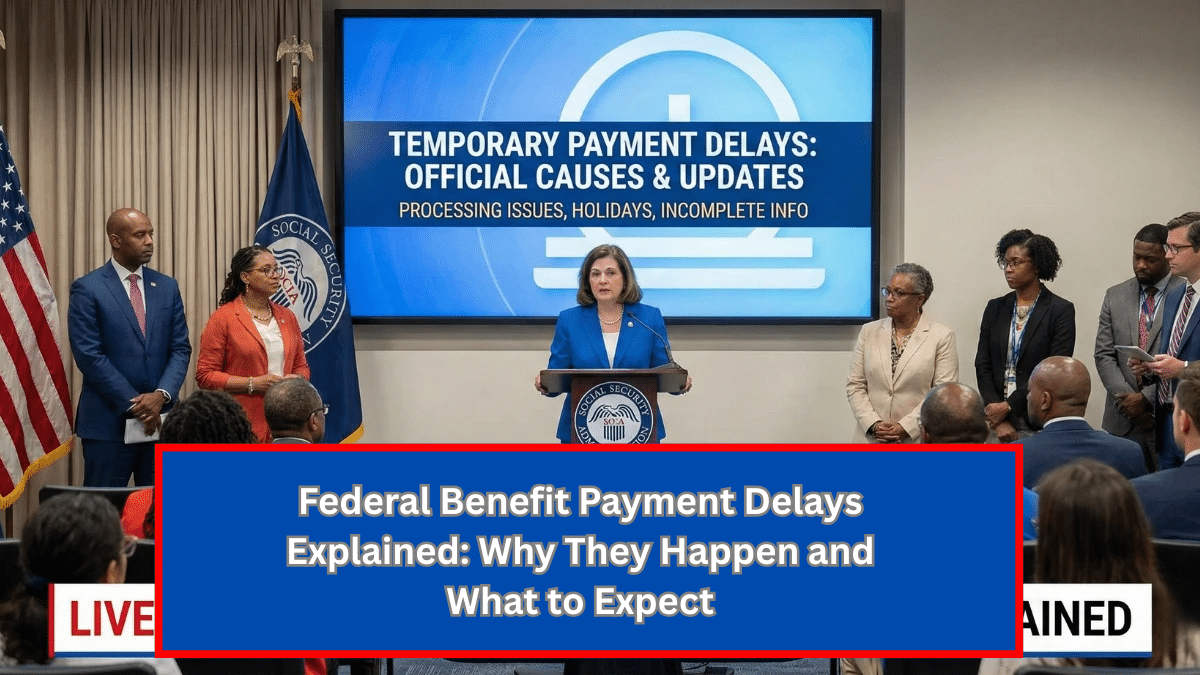
Occasional delays in federal benefit payments can cause concern among recipients, but in most cases these interruptions are temporary and procedural, not a loss of eligibility or a benefit reduction. Programs administered by agencies such as the Social Security Administration (SSA), the Internal Revenue Service (IRS), and the U.S. Department of the Treasury operate on strict payment schedules that can be affected by routine verification steps, banking timelines, or calendar-related factors.
This article explains the verified reasons payment delays occur and what beneficiaries should realistically expect.
Are Federal Benefit Delays a Sign of a Policy Change?
No. A temporary delay does not indicate a policy change or a reduction in benefits. Federal payment programs function under established laws, and benefits resume once routine checks or processing steps are completed. Any actual policy change would require formal approval, public notification, and official guidance from the administering agency.
How Federal Payments Are Processed
Federal benefit payments are released on scheduled dates and then routed through the U.S. Department of the Treasury to banks and financial institutions. While the government may send the payment on time, the exact moment funds appear in a recipient’s account depends on the bank’s internal processing schedule.
As a result, posting times can vary even when the payment itself was issued as scheduled.
Common Verified Reasons for Temporary Payment Delays
| Reason | What Happens |
|---|---|
| Identity or eligibility review | Routine verification temporarily pauses release |
| Banking processing times | Deposit posts later the same day or next business day |
| Weekend or federal holiday | Payment posts on the next business day |
| Recent account changes | Updated details require validation |
| System maintenance | Short-term processing backlogs may occur |
These delays are typically brief and resolved automatically.
What Payment Delays Do Not Mean
A delayed payment does not mean benefits have been canceled, reassessed, or permanently reduced. Routine cost-of-living adjustments, annual updates, or standard reviews also do not stop payments unless an official announcement is made.
What Beneficiaries Should Do if a Payment Is Late
If a federal payment does not arrive on the expected date, beneficiaries should:
- Wait two to three business days after the scheduled payment date
- Confirm that bank account information is accurate
- Check the official program website or account portal
- Contact the administering agency if the delay continues
Most issues are resolved without further action.
Key Facts to Remember
- Most federal payment delays are administrative or banking-related
- Agencies issue payments on fixed, lawful schedules
- Banks determine when funds appear in accounts
- Federal holidays often shift deposit timing
- Any real policy change includes official public notice
Conclusion
Temporary delays in federal benefit payments are usually caused by processing, verification, or calendar-related factors—not changes in eligibility or benefit rules. Understanding how federal payments are handled helps beneficiaries remain informed and rely on official guidance rather than speculation.
Disclaimer
This article is for informational purposes only and does not constitute legal or financial advice. Federal benefit timing depends on program rules, individual records, and official government procedures.

Written by our editorial team, committed to accurate and responsible reporting.