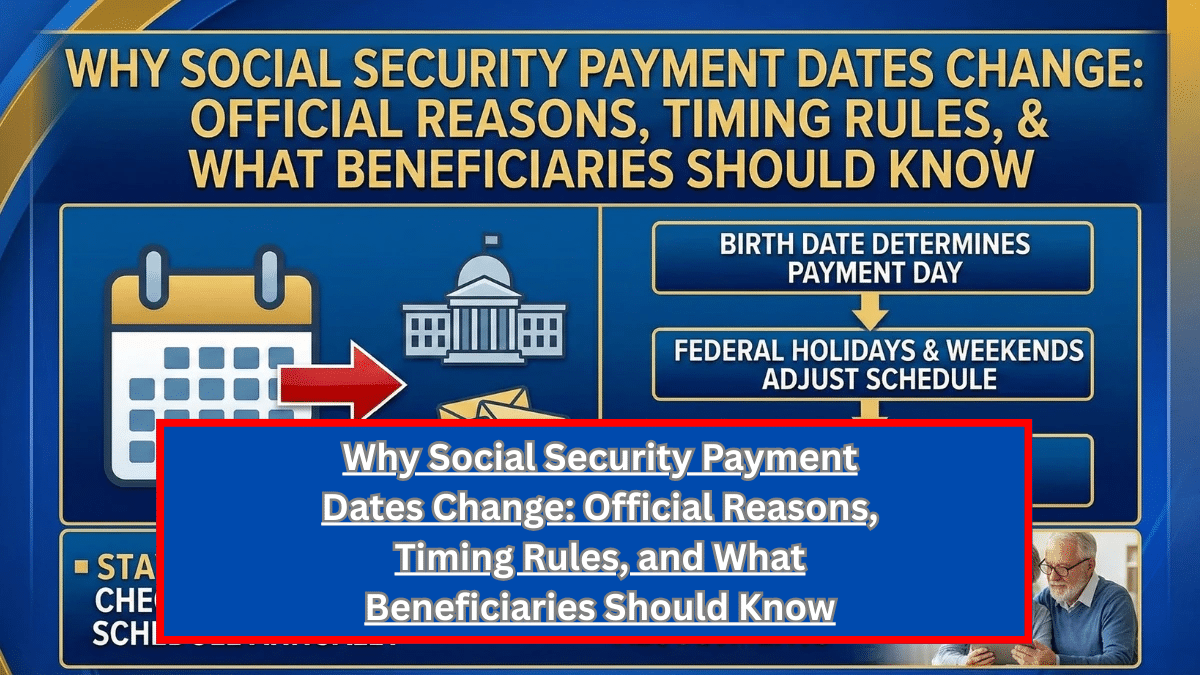
Social Security payment dates may sometimes appear to change, causing beneficiaries to worry about missed or delayed deposits. In most situations, these changes are normal, pre-scheduled adjustments rather than errors or benefit reductions. By understanding how the Social Security Administration (SSA) sets its payment calendar—and why dates occasionally move—beneficiaries can plan more confidently and avoid unnecessary confusion or misinformation.
How Social Security Payment Dates Are Normally Scheduled
The SSA distributes benefits using a staggered payment system. Payments are scheduled based on a beneficiary’s birth date and the type of benefit received. This structure helps spread payments evenly throughout the month and allows banks and payment networks to process deposits efficiently and reliably.
Legitimate Reasons Social Security Payment Dates Can Change
Payment date changes usually occur because of calendar timing, not policy changes. If a scheduled payment date falls on a weekend or a federal holiday, the SSA issues the payment on the previous business day. This ensures beneficiaries receive their funds on time rather than waiting for banks to reopen.
Common Payment Schedule Adjustments Explained
When a payment date falls on a weekend, the SSA sends the payment on the prior business day. If a federal holiday falls on a scheduled payment date, the payment is also released one business day earlier. For Supplemental Security Income (SSI), if the 1st of the month falls on a weekend or holiday, the payment is issued on the last business day of the previous month. In addition, banks may post deposits at different times depending on their processing rules. Changes to a beneficiary’s address or direct deposit information can also result in a one-time adjustment to payment timing.
Do Payment Date Shifts Mean a Delay or Benefit Reduction?
No. A change in payment date does not reduce benefits and usually does not mean a delay. In most cases, the payment is released earlier than normal to avoid weekends or holidays. The total monthly benefit amount remains the same.
What Beneficiaries Should Do When Payment Dates Change
When a payment date shifts, beneficiaries should review the official SSA payment calendar and allow time for their bank to post the deposit. If there has been a recent change to banking or address information, checking the SSA account for notices can help explain any one-time timing adjustment. In most cases, no action is required.
How Beneficiaries Can Avoid Confusion
To stay informed, beneficiaries should rely on SSA’s official announcements and annual payment calendar rather than social media claims or unverified sources. While banks may display deposits at different times of day, the SSA’s release date determines when the payment is officially sent.
Key Facts to Remember
Payment date changes are usually related to calendar timing. Payments are moved earlier when weekends or federal holidays are involved. Benefit amounts do not change due to payment date shifts. SSI follows specific rules tied to the 1st of the month. The SSA’s official payment calendar remains the most reliable source of information.
Conclusion
Social Security payment date changes are typically planned adjustments designed to ensure beneficiaries receive their funds without interruption. Understanding these rules can help prevent unnecessary concern, support better monthly budgeting, and reduce the impact of misinformation.
Disclaimer
This article is for informational purposes only and does not constitute legal or financial advice. Payment timing depends on official SSA schedules and individual banking practices.

Written by our editorial team, committed to accurate and responsible reporting.