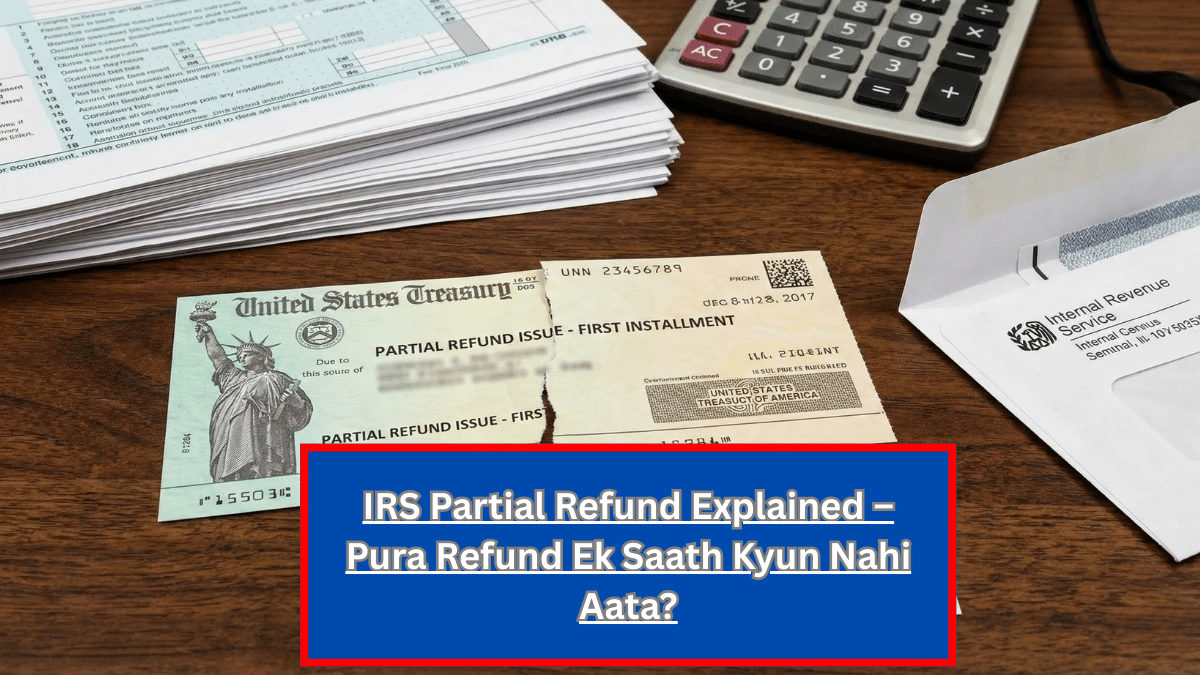
Some taxpayers notice that the IRS issues only part of their tax refund first, with the remaining amount arriving days or weeks later. This can feel confusing and may raise concerns about denial or mistakes. In most cases, however, a partial refund reflects standard IRS processing procedures, not a problem with the return.
This article explains what a partial refund means, why the IRS releases refunds in stages, and what taxpayers should expect during normal refund processing.
What a Partial IRS Refund Actually Means
A partial refund means the IRS has approved and released the portion of your refund that has fully cleared processing, while holding the remaining amount for additional review, verification, correction, or offset.
Importantly:
- The refund is not automatically reduced
- The delay is about timing, not eligibility
- Remaining amounts are often released later
Common Reasons the IRS Issues a Partial Refund First
| Reason | Why It Happens |
|---|---|
| Refundable credits | Credits require extra verification |
| Math or data corrections | Adjustments finalized later |
| Offsets for debts | Portion applied to balances first |
| Identity verification | Base refund released while checks continue |
| Employer data matching | Waiting on third-party records |
Each component of a refund follows its own processing path.
Refundable Credits Often Clear Separately
Refunds that include refundable tax credits are among the most common causes of partial issuance.
The IRS may release the non-credit portion of the refund once basic checks are complete, while holding the credit portion until eligibility is confirmed. This does not mean the credit is denied—only that it requires additional review.
Offsets Can Affect Refund Timing
If part of a refund is applied to qualifying obligations such as:
- Federal tax debt
- State tax balances
- Certain government debts
The remaining refund amount may be issued separately. This can appear as a split or partial refund even when the total amount owed is correct.
Corrections and Recalculations During Processing
When the IRS corrects:
- Math errors
- Withholding discrepancies
- Credit calculation issues
It may issue an initial payment first, followed by a supplemental payment after recalculations are finalized. Taxpayers are usually informed through an IRS notice.
Does a Partial Refund Mean There Is a Problem
No. A partial refund does not automatically mean:
- An audit
- A penalty
- A refund denial
In most cases, the remaining balance is released once verification steps are completed, and no action is required from the taxpayer.
How to Track the Remaining Refund Amount
IRS refund status tools typically show one payment at a time. Additional payments may appear later as processing milestones are reached.
Any changes to the refund amount or timing are usually explained through official IRS notices.
What Taxpayers Should Do
Taxpayers should:
- Monitor official IRS refund status tools
- Read any mailed IRS notices carefully
- Allow standard processing time
Contacting the IRS is recommended only if the remaining amount does not arrive after processing is complete.
KEY FACTS (One Bullet-Point Section)
- Partial refunds are a normal IRS processing outcome
- Refundable credits commonly cause split payments
- Offsets can affect timing without reducing totals
- Most remaining balances are released automatically
- IRS notices explain any adjustments made
Conclusion
IRS refunds are sometimes partially issued first due to verification requirements, refundable credits, offsets, or processing corrections. This is a routine part of refund handling and usually resolves on its own. In most cases, taxpayers receive the full eligible refund amount over time without any action needed.
Disclaimer
This article is for informational purposes only and does not constitute tax or financial advice. IRS refund timing and payment methods are subject to official processing rules and individual tax return details.

Written by our editorial team, committed to accurate and responsible reporting.