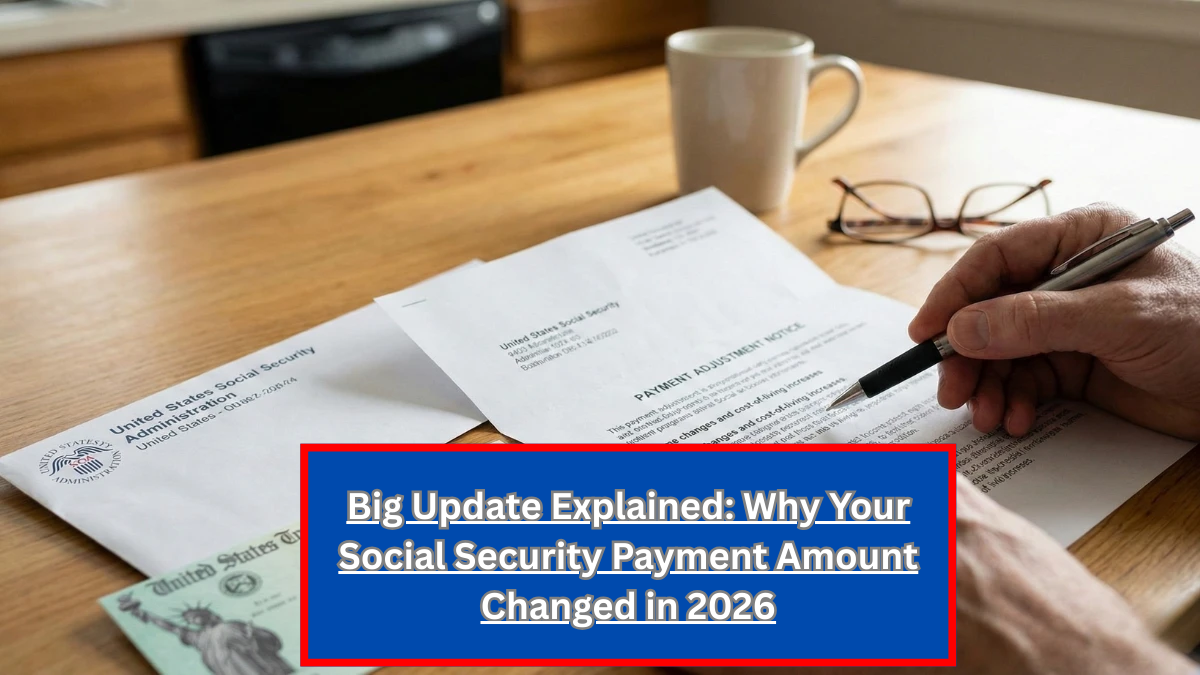
Many Social Security beneficiaries become concerned when their monthly payment amount changes from one month to the next. A higher or lower deposit can raise questions about overpayments, penalties, or possible rule changes. However, in most situations, payment adjustments are routine and part of standard benefit administration.
The Social Security Administration (SSA) regularly updates payment amounts when new information affects benefit calculations. These updates follow long-standing federal rules and established notice procedures. This detailed guide explains why adjustments happen, how they are applied, and what beneficiaries should understand to avoid confusion.
Focus Keyword: Social Security Payment Adjustment 2026
Key Highlights
Reason | What It Means
Cost-of-Living Adjustment (COLA) | Annual inflation-based increase
Retroactive correction | Past underpayment or overpayment fixed
Earnings update | Work income affects benefit calculation
Medicare premium change | Premium deduction alters net payment
Eligibility update | Benefit recalculation due to status change
Are Social Security Payment Adjustments Normal?
Yes. Social Security payment adjustments are normal and lawful. The SSA reviews and recalculates benefits whenever required under federal guidelines. An adjustment does not automatically mean there was a mistake, penalty, or reduction in eligibility.
Changes may occur because of annual inflation updates, reported earnings, Medicare deductions, or corrections to prior calculations. The SSA is required to notify beneficiaries whenever a payment amount changes, explaining the reason in writing.
Understanding these routine processes helps beneficiaries avoid unnecessary worry when their deposit differs from previous months.
Cost-of-Living Adjustment (COLA) and Inflation Updates
One of the most common reasons for a payment change is the annual Cost-of-Living Adjustment (COLA). COLA is designed to help benefits keep pace with inflation.
Each year, benefit amounts may increase based on inflation data. When the new rate is applied:
• The updated amount replaces the old payment
• The increase appears automatically
• No reapplication is required
Because the increase is applied at the beginning of the year, the first updated deposit may look like an adjustment compared with prior months.
Retroactive Corrections and Record Updates
Sometimes the SSA identifies a past underpayment or overpayment. When this occurs, a correction is applied.
Examples include:
• A previously missing earnings record
• Delayed reporting of work income
• Benefit calculation corrections
• Administrative review adjustments
If a beneficiary was underpaid, the SSA may issue a one-time higher payment. If an overpayment occurred, a temporary reduction or repayment plan may appear. These corrections are part of routine oversight and are clearly explained in official notices.
Earnings and Work Income Adjustments
For beneficiaries who continue working while receiving benefits, reported earnings can affect payment amounts.
If updated income information is received:
• Benefits may be recalculated
• Temporary reductions may apply
• Future payments may adjust
Once earnings fall within allowed limits, payment amounts can stabilize again. These adjustments are not penalties—they are formula-based recalculations required under existing law.
Medicare Premium Changes and Net Payment Differences
Many beneficiaries have Medicare premiums deducted directly from their Social Security payments. Changes to Medicare Part B or other premium costs can alter the net deposit amount, even when the gross benefit remains unchanged.
For example:
• Gross benefit stays the same
• Medicare premium increases
• Net payment decreases
This often causes confusion because recipients focus on the final deposit amount rather than the total benefit before deductions.
Eligibility or Status Updates
Certain life changes can trigger a benefit recalculation, including:
• Change in marital status
• Disability status updates
• Transition between benefit types
• Dependents added or removed
When eligibility factors change, the SSA adjusts payments accordingly. These updates follow established policies and are not sudden rule changes.
What Has Not Changed in 2026
There are no new SSA rules automatically reducing benefits in 2026. There are no surprise penalties applied without notice. Beneficiaries are not required to reapply due to routine payment adjustments.
The SSA continues to operate under long-standing benefit calculation formulas and written notification requirements. Every adjustment must be documented and communicated clearly.
What Beneficiaries Should Do
If you notice a payment adjustment:
• Review your SSA notice explaining the change
• Compare gross and net benefit amounts
• Check for Medicare premium updates
• Review any reported earnings updates
• Allow for timing effects around holidays
Contact the SSA only if the explanation remains unclear after reviewing official communication.
Being informed helps beneficiaries distinguish between normal updates and issues that require follow-up.
Important Facts to Remember
• Payment adjustments are usually routine
• COLA increases commonly change benefit amounts
• Earnings updates may trigger recalculations
• Medicare premiums affect net deposits
• Retroactive corrections may appear as one-time changes
• SSA notices always explain payment adjustments
Conclusion
Social Security payment adjustments in 2026 are part of normal benefit administration. Whether caused by inflation updates, earnings recalculations, Medicare premium changes, or record corrections, these adjustments follow established procedures.
Disclaimer
This article is for informational purposes only and does not constitute financial or legal advice. Social Security benefits and adjustments are governed by federal law and official SSA notifications.

Written by our editorial team, committed to accurate and responsible reporting.