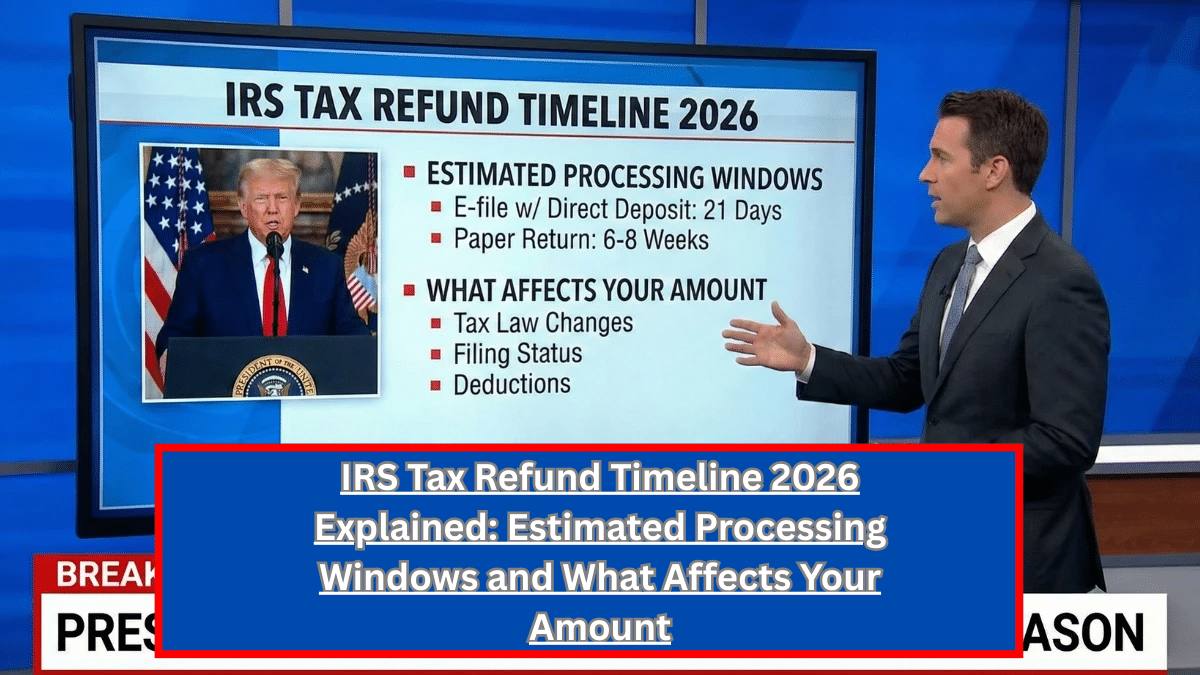
Every year, millions of U.S. taxpayers look forward to receiving their tax refunds — especially those who depend on these refunds to pay bills, save, or invest. With the 2026 tax season approaching, many people are asking: When will the IRS process refunds? How long does it take? What affects the amount? Understanding the refund timeline and the factors that influence your refund can help you plan your finances and set realistic expectations.
This article clearly explains the 2026 IRS tax refund timeline, typical processing windows, and the key factors that affect the size and timing of your refund.
What Is a Tax Refund?
A tax refund is the amount of money the government returns to taxpayers when they’ve paid more tax throughout the year than they owe. This can happen through:
- Income tax withholding from paychecks
- Estimated tax payments
- Tax credits and deductions
When your total tax payments exceed your actual tax liability, the IRS issues a refund for the difference.
2026 IRS Tax Refund Timeline: Estimated Processing Windows
The IRS processes tax returns in phases. While exact dates vary each year based on tax law, staffing, and system updates, the general timeline looks like this:
Filing Season Opens (Typically Late January)
The IRS usually begins accepting tax returns in late January. For 2026, most taxpayers can expect the filing window to open around the third or fourth week of January.
Peak Processing Period (February Through March)
Once filing opens, processing ramps up quickly. Most electronically filed (e-filed) returns are accepted and processed within 21 days of receipt, assuming there are no errors or additional reviews required.
Mid-Season Adjustments (April)
As April approaches, filings increase sharply because of the tax deadline (typically April 15, unless extended). Returns filed closer to the deadline may take longer to process simply due to volume.
Late-Season and Extensions (April Through October)
If you file for an extension, you generally have until October 15 to submit your 2026 return. Refunds on extended returns often take longer because they are processed later in the cycle.
How You File Matters: E-file vs. Paper
How you submit your return significantly affects the timeline:
Electronic Filing (E-file)
- Faster processing
- Most refunds issued within 21 days
- Direct deposit speeds delivery
Paper Filing
- Slower processing due to manual entry
- Refunds can take 6–12 weeks or longer
- Paper check delivery adds additional days
Electronic filing with direct deposit is the fastest and most reliable method.
What Affects Your Refund Amount and Timing
Several factors influence how much your refund will be and how quickly it’s issued:
Accuracy of Your Return
Simple errors in math, missing forms, incorrectly entered Social Security numbers, or mismatched income figures can delay processing or reduce your refund.
Earned Income Tax Credit (EITC) and Child Tax Credit (CTC)
If you claim certain credits like the EITC or CTC, the IRS may place additional review procedures on your return. This can delay your refund beyond the typical processing window.
Outstanding Debts or Obligations
If you owe past-due federal taxes, state taxes, child support, or student loans in default, the IRS may offset your refund to cover these debts. This can reduce the amount you receive.
Identity Verification Issues
If the IRS suspects potential identity theft or fraud, you may be asked to verify your identity before your refund is released. This adds time to the processing window.
Common Delay Triggers to Watch Out For
The IRS may delay a refund for a variety of reasons, including:
- Incomplete or illegible information
- Mismatched data between your return and employer or financial institution records
- Filing multiple returns for the same year
- Claiming certain credits without supporting documentation
- Errors in direct deposit information
Double-checking your return before submission can help prevent many common delays.
What Happens After Your Return Is Accepted
Once the IRS accepts your return:
- Processing begins — the IRS reviews your return for accuracy and eligibility for credits.
- Refund approved — if everything checks out, the IRS issues your refund.
- Refund delivered — most refunds are sent via direct deposit; paper checks take longer.
While most refunds are issued within 21 days, some returns may take longer depending on the factors noted above.
Tracking Your Refund
Although the IRS provides tools for taxpayers to check the status of their refund, this article focuses on explaining the timeline and not on step-by-step tracking features. Generally, you can expect your return to be reflected in IRS systems within 24 hours to a few days after e-filing.
Tips to Speed Up Your Refund
Here are a few practices that can help you receive your refund faster:
- File electronically instead of paper filing
- Choose direct deposit
- Double-check all information before submitting your return
- Submit any required supporting documents promptly
- Avoid common errors like incorrect Social Security numbers
Filing early and accurately is the best way to minimize delays.
Conclusion
The IRS tax refund timeline for 2026 is shaped by when you file, how you file, and whether your return requires additional review. Most electronically filed returns with direct deposit are processed within about 21 days, but complex returns or those claiming certain credits may take longer.
Disclaimer
This article is for informational purposes only and does not constitute tax, legal, or financial advice. Refund timing and amounts depend on individual filings and official IRS procedures.

Written by our editorial team, committed to accurate and responsible reporting.