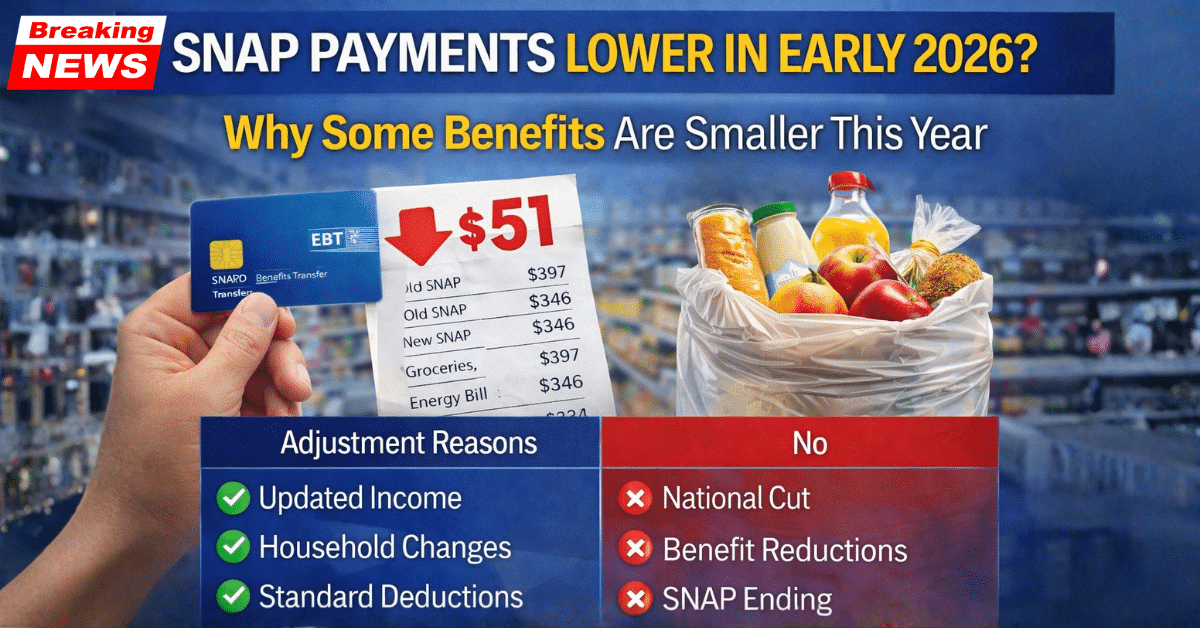
In the first weeks of 2026, many SNAP recipients noticed something unsettling: their benefit amount dropped, even though SNAP itself wasn’t ending. For households already budgeting carefully, even a small reduction can feel like a policy cut. The reality is less dramatic — but still important to understand.
These lower payments are not a nationwide reduction. They are the result of routine recalculations that happen when household details change or annual adjustments take effect.
Why some SNAP payments are smaller this year
SNAP benefits are recalculated regularly, not locked in permanently. In early 2026, several factors are causing changes for some households:
- Updated household income information
- Changes in household size
- Adjustments to standard deductions
- Recertification reviews completed at year-end
- Correction of previously estimated income
When any of these change, benefit amounts are recalculated automatically.
Income changes are the most common reason
Even small income increases can affect SNAP. This doesn’t always mean a raise. Overtime pay, seasonal work, bonuses, or returning to work part-time can all raise reported income enough to reduce benefits.
In many cases, recipients were receiving higher benefits temporarily based on estimated income. Once actual income is verified, SNAP adjusts the amount.
Household size adjustments matter more than people realize
If a household member moved out, aged out, or stopped being counted as a dependent, SNAP benefits may decrease. These changes often occur quietly and show up only when payments are recalculated.
Failing to report a household change can also lead to retroactive corrections.
Annual deductions and expense reviews
Each year, SNAP updates standard deductions and expense allowances. While these adjustments help many households, they don’t increase benefits for everyone. In some cases, updated calculations result in a lower net benefit — even when nothing else changed.
Medical expenses, shelter costs, and utility allowances are all part of this review.
This is not a cut or policy rollback
There has been no across-the-board SNAP reduction in 2026. No federal order reduced benefits nationwide. What recipients are seeing are individualized adjustments based on eligibility rules that have been in place for years.
That distinction matters, especially as misleading claims online suggest benefits are being “taken away.”
What to do if your SNAP payment dropped
If your benefit amount changed unexpectedly, the most practical steps are simple:
- Review your most recent SNAP notice
- Check income and household details on file
- Confirm your recertification status
- Contact your state SNAP office if something looks incorrect
Mistakes do happen, and corrections are possible when information is updated.
When benefits can increase again
Lower payments are not permanent. Benefits can increase if income drops, household size changes, or allowable expenses rise. SNAP adjusts both upward and downward based on verified information.
For many households, these recalculations stabilize within a few months.
SNAP continues in 2026, but it continues as a needs-based program — one that responds to changes in real life. Lower payments don’t signal the end of benefits. They reflect how closely the program tracks income, household composition, and expenses.
Disclaimer
This article is for informational purposes only and does not provide legal or benefits advice. SNAP eligibility rules and benefit calculations vary by state and household circumstances. Recipients should rely on official state SNAP agency notices for decisions affecting their benefits.

Written by our editorial team, committed to accurate and responsible reporting.