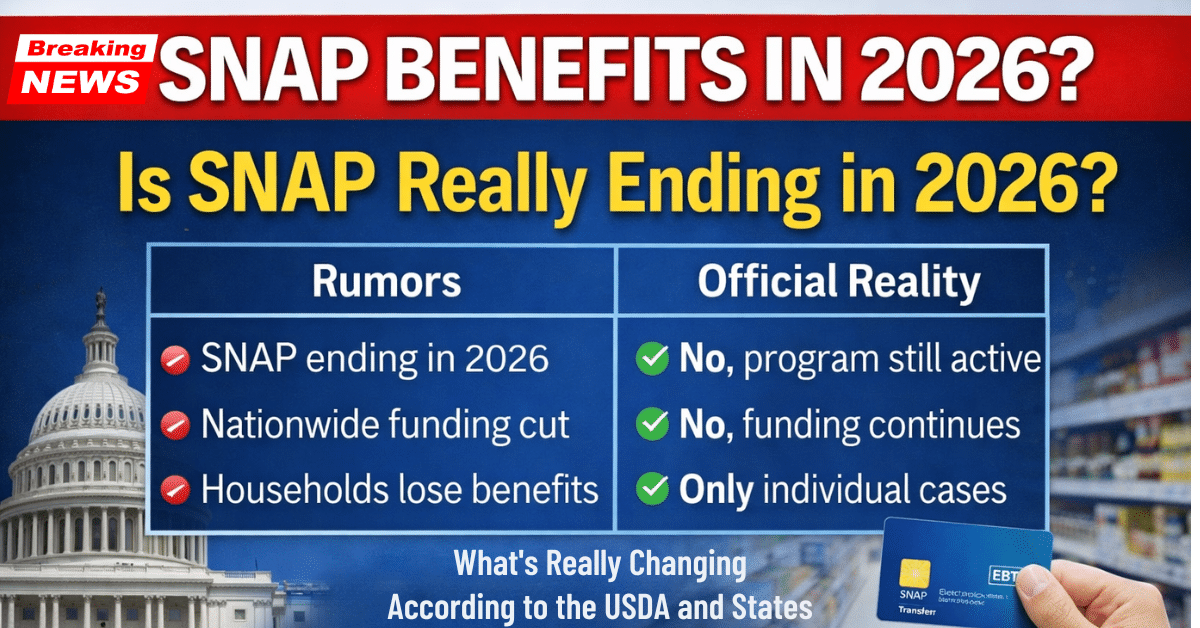
Recent claims spreading across social media and some websites suggest Americans should prepare to say “goodbye” to SNAP benefits in 2026. For millions of households that rely on monthly food assistance, that idea is alarming — and it’s also inaccurate. What’s driving the confusion is not the end of SNAP, but routine changes that happen almost every year.
Here’s what’s actually changing, what isn’t, and why SNAP remains firmly in place.
Is SNAP ending in 2026?
No. SNAP is not ending in 2026. There is no federal law, executive order, or USDA announcement that eliminates the program. SNAP continues as a permanent federal benefit under existing legislation, with funding approved through the normal budget process.
The program remains federally authorized and is still administered by states under USDA oversight — exactly as it has been for decades.
Where the “Goodbye SNAP” narrative comes from
Most of the panic traces back to routine administrative updates being misread or misrepresented. In 2026, states are continuing standard processes such as income reviews, eligibility checks, and compliance enforcement. When benefits stop for individual households, it’s often due to changed circumstances — not a program-wide decision.
Online headlines often blur the difference between individual benefit loss and the program ending altogether.
What is actually changing in 2026
SNAP in 2026 looks largely the same, with adjustments that occur regularly, including:
- Updated income eligibility thresholds
- Recalculated standard deductions
- Continued enforcement of work requirements for certain adults
- Ongoing verification and fraud-prevention checks
- State-level compliance reviews
These updates do not represent cuts or shutdowns. They are part of normal program administration.
ALSO READ: VA Disability Pay Is Rising in 2026 — What the COLA Increase Means for Your Monthly Check
Who might lose SNAP benefits this year
Some recipients could see benefits reduced or stopped if their personal situation changes. Common reasons include:
- Household income rising above eligibility limits
- Failure to meet applicable work requirements
- Missing recertification deadlines
- Not reporting changes in household size or residence
These outcomes are individual and case-specific — not national policy changes.
Who remains protected from work rules and cuts
Federal SNAP rules continue to protect several groups from work requirement enforcement, including:
- Seniors
- People with disabilities
- Children
- Pregnant individuals
- Caregivers
- Households experiencing verified hardship
These exemptions remain in effect in 2026 and have not been removed.
Can states end SNAP on their own?
No. States administer SNAP, but they do not have the authority to eliminate it. Only Congress can make major structural changes to the program. States must follow federal law and USDA guidance when operating their SNAP programs.
ALSO READ: Why Public Policy Fails When Health Equity Is an Afterthought
What SNAP recipients should do now
To avoid interruptions, recipients should focus on the basics:
- Watch for official notices from their state SNAP agency
- Report income or household changes promptly
- Complete recertification paperwork on time
- Ignore unverified claims circulating on social media
State agencies and official government sources remain the most reliable place for accurate updates.
Why SNAP is still secure
Despite recurring rumors, SNAP continues nationwide in 2026. There is no “goodbye” order, no hidden phaseout, and no federal decision to end food assistance. What’s happening now is routine oversight — not a shutdown of one of the country’s most critical safety-net programs.
Frequently Asked Questions
Is SNAP being cancelled or phased out in 2026?
No. SNAP is not being cancelled, phased out, or replaced in 2026. There is no federal law or USDA directive ending the program. SNAP continues nationwide under existing legislation.
Why are people saying SNAP is ending this year?
Most of the confusion comes from routine eligibility reviews, work requirement enforcement, and benefit recalculations. When some households lose benefits, it’s often misrepresented online as a nationwide shutdown.
Will everyone have to work to keep SNAP in 2026?
No. Work requirements only apply to certain adults without dependents. Seniors, people with disabilities, pregnant individuals, caregivers, and children remain exempt under federal rules.
Can my SNAP benefits stop even if the program continues?
Yes. Benefits can stop if your income increases, paperwork is not completed, or recertification deadlines are missed. These are individual eligibility issues, not program-wide cuts.
Disclaimer
This article is for informational purposes only and does not provide legal or benefits advice. SNAP rules, eligibility, and benefit amounts vary by state and are subject to change. Recipients should rely on official USDA or state SNAP agency communications for the most accurate and up-to-date information.

Written by our editorial team, committed to accurate and responsible reporting.