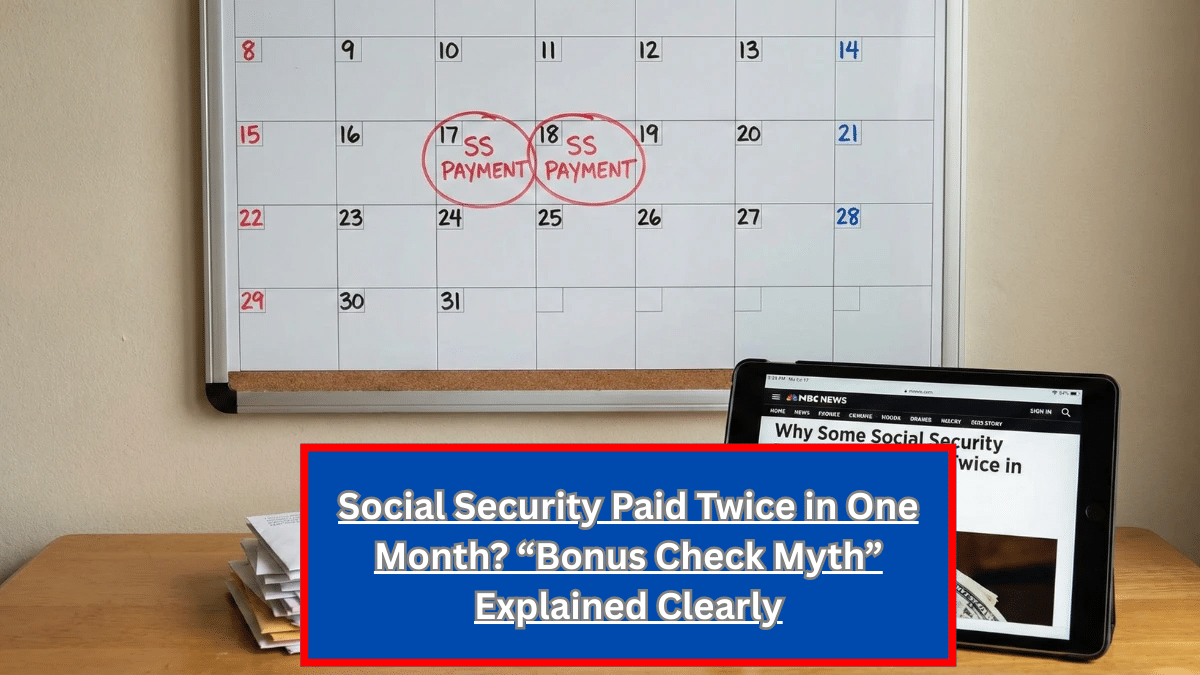
Some Social Security recipients are surprised to see two payments deposited in the same month. This often leads to confusion, excitement, or even rumors about bonus checks or special programs. However, receiving two payments in one calendar month is usually the result of standard scheduling rules — not an extra benefit or surprise increase.
The payment process is managed by the Social Security Administration (SSA), and its calendar system explains why this happens. Understanding how the schedule works helps prevent financial confusion and misinformation.
Let’s break down the real reason behind double payments and what recipients should expect.
Key Highlights at a Glance
| Situation | What It Means |
|---|---|
| Two payments in one month | Usually SSI scheduling effect |
| Weekend or holiday on 1st | Payment sent early |
| Early payment | Applies to next month |
| Following month | No SSI deposit |
| Bonus payment? | No |
| New rule change? | No |
Is Getting Paid Twice in One Month an Error?
No. Receiving two Social Security payments in one month is not a mistake.
It happens when scheduled payment dates fall on weekends or federal holidays. When that occurs, SSA sends the payment earlier — typically on the last business day before the scheduled date.
This early deposit can cause two payments to appear within the same calendar month, even though one of them belongs to the following month.
There is no duplication error and no overpayment in this situation.
How Social Security Payment Scheduling Works
SSA uses fixed monthly payment schedules depending on the type of benefit a person receives.
For example:
- Supplemental Security Income (SSI) is normally paid on the 1st of each month.
- Retirement and SSDI benefits are paid on Wednesdays based on birth date.
If a scheduled date falls on a Saturday, Sunday, or federal holiday, SSA sends the payment on the previous business day.
This scheduling adjustment can shift a payment into the previous month — making it appear that two payments were issued in one month.
The Most Common Reason: SSI Payment Timing
Recipients who receive Supplemental Security Income (SSI) are most likely to notice two payments in one month.
Here’s how it happens:
| Situation | What Happens |
|---|---|
| SSI normally paid on the 1st | Regular monthly deposit |
| 1st falls on weekend/holiday | Payment sent early |
| Early payment posts at month’s end | Two payments appear in one month |
| Following month | No SSI payment |
For example, if the 1st of October falls on a Sunday, the October SSI payment may be issued on September 29. That means recipients receive a payment on September 1 (for September) and September 29 (for October).
In October, there would be no SSI payment because it was already paid early.
Why This Is Not an Extra Payment
When SSI is paid early, it is simply the next month’s regular benefit — not a bonus or extra check.
The early deposit may look like additional money, but it is just a timing adjustment. That is why recipients often see no SSI payment the following month, since it was already delivered at the end of the prior month.
This pattern occurs several times in certain years depending on how weekends and holidays fall.
What About Retirement or SSDI Benefits?
Retirement and Social Security Disability Insurance (SSDI) benefits follow a different schedule. Payments are issued on Wednesdays based on the recipient’s birth date:
- Second Wednesday
- Third Wednesday
- Fourth Wednesday
Because these payments are tied to specific weekdays rather than the 1st of the month, they rarely result in two payments appearing in one calendar month.
Only rare situations — such as switching from one benefit type to another — might cause temporary overlap.
Why Some People Think a Bonus Was Issued
Seeing two deposits close together can easily create the impression of a bonus.
Online headlines and social media posts sometimes add to the confusion by suggesting:
- Surprise extra checks
- Government bonus programs
- Special cost-of-living payments
However, SSA does not issue unexpected bonus payments without formal announcement.
If two payments appear, the explanation is almost always scheduling — not a new benefit program.
What Has NOT Changed
There are:
- No new SSA payment rules
- No hidden bonus programs
- No automatic extra benefits tied to double-payment months
- No policy changes connected to this calendar effect
The system has operated this way for many years.
Double payments are simply the result of calendar adjustments when the 1st falls on a non-business day.
What Recipients Should Do
If you receive two payments in one month:
- Check the SSA annual payment calendar.
- Confirm whether the 1st of the upcoming month falls on a weekend or holiday.
- Remember that one of those payments applies to the next month.
- Budget carefully to prepare for the following month with no SSI deposit.
Planning ahead prevents financial stress during months without a scheduled payment.
Key Facts to Remember
- Two payments in one month are usually caused by early SSI scheduling.
- One of the payments belongs to the following month.
- No bonus or extra benefit is issued.
- The next month may not have an SSI payment.
- SSA payment rules have not changed.
Conclusion
Getting paid twice in one month can be surprising, but it is a normal scheduling outcome — especially for SSI recipients when the 1st falls on a weekend or holiday.
Disclaimer
This article is for informational purposes only and does not constitute financial or legal advice. Social Security payment schedules are governed by federal law and official SSA rules.

Written by our editorial team, committed to accurate and responsible reporting.