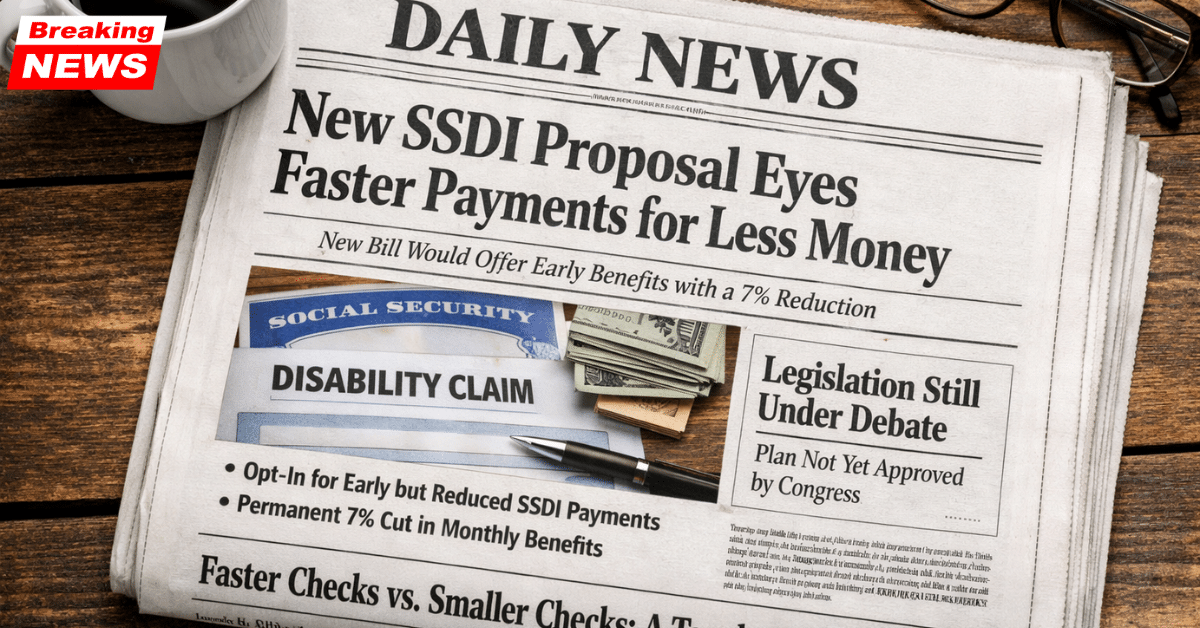
For people stuck in the long gap between applying for disability and finally receiving a first payment, time has become its own burden. Rent still comes due, prescriptions still need refills, and savings if they exist at all often disappear months before a decision arrives. Against that backdrop, a newly proposed Social Security bill is starting to circulate quietly through policy discussions.
The proposal centers on a trade-off: earlier access to SSDI payments, but at a permanent cost.
The problem lawmakers are responding to
SSDI is designed to support people who can no longer work because of serious medical conditions. In practice, the system moves slowly. Initial reviews, medical documentation checks, and appeals routinely stretch the process into many months and for some applicants, years.
During that waiting period, there is often no income replacement at all. This reality has pushed lawmakers to explore options that reduce hardship without rewriting the entire disability system.
What the bill would change
Under the proposal, SSDI applicants who meet medical eligibility standards could choose an optional early payment pathway. Instead of waiting through the full approval timeline, they would begin receiving benefits sooner.
The cost of that speed would be a permanent reduction of roughly 7 percent in the monthly SSDI benefit amount.
The key element is choice. This would not replace the existing system or reduce benefits automatically. Applicants could still wait and receive the full approved amount if they prefer.
How the reduction would work
The structure mirrors how early retirement benefits are adjusted. Accepting payments sooner locks in a lower monthly amount for as long as SSDI is paid.
Once chosen, the reduction would not reverse later. The lower payment would apply for the duration of eligibility, even after the normal waiting period would have ended.
Applicants who do not opt in would move through the current process exactly as they do today.
Who this option is likely aimed at
This proposal appears designed for people facing immediate financial pressure those without savings, those covering ongoing medical costs, or households already behind on essential bills.
For someone in that position, faster access to SSDI could stabilize housing, utilities, and healthcare during the most uncertain months. Others, especially applicants with alternative income or family support, may decide the long-term reduction is not worth the earlier payment.
Current SSDI process vs. proposed option
| Aspect | Current SSDI System | Proposed Early Option |
|---|---|---|
| Time to payment | Often months or longer | Shortened timeline |
| Monthly benefit | Full approved amount | About 7% lower |
| Participation | No early choice | Voluntary |
| Medical rules | Standard eligibility | Same standards apply |
| Long-term impact | Full lifetime benefit | Permanently reduced |
The proposal does not lower medical eligibility requirements or change how disability is evaluated.
ALRO READ: 75 Million Americans Get Fatter Social Security Checks
Legislative status so far
The bill has been introduced for discussion but has not passed. No SSDI payment rules have changed, and the Social Security Administration has not implemented any early payment option.
Any adjustment to benefit timing or amounts would require congressional approval followed by formal agency guidance.
What applicants should do now
Nothing about the SSDI application process has changed. Applicants should continue following current procedures and timelines and avoid making financial plans based on the proposal alone.
If the bill advances, official announcements from Congress and the Social Security Administration would outline eligibility, timelines, and opt-in rules.
Why this proposal is drawing attention
The discussion reflects a broader concern about how long SSDI delays affect people at their most vulnerable moments. Rather than forcing a single solution, the proposal introduces flexibility allowing applicants to decide whether faster access is worth a smaller check.
Whether that balance is fair, sustainable, or widely adopted remains an open question as lawmakers continue to debate the idea.
Disclaimer: This article is for general informational purposes only. Social Security legislation, SSDI benefit rules, and payment timelines are subject to congressional approval and official Social Security Administration guidance. Readers should rely on official sources for final and accurate information.

Written by our editorial team, committed to accurate and responsible reporting.