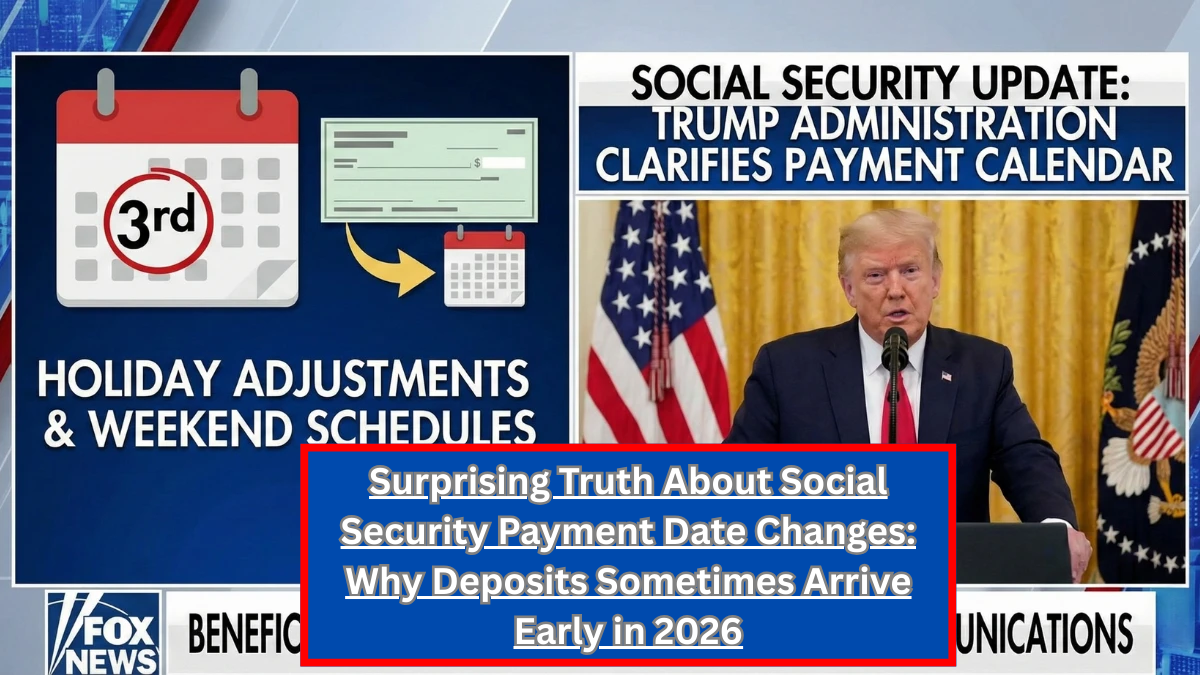
Many Social Security recipients become concerned when their monthly payment arrives earlier or appears to shift without prior notice. Online rumors often suggest hidden rule changes or benefit cuts, but in reality, most payment date shifts follow long-standing scheduling rules. These adjustments are predictable and allowed under existing procedures.
The Social Security Administration (SSA) follows a structured national payment calendar. However, weekends, federal holidays, benefit type differences, and bank processing timelines can cause deposits to arrive on different days from month to month. This article explains the verified reasons payment dates shift, how the system works, and what beneficiaries should expect in 2026.
Focus Keyword: Social Security Payment Date Shift 2026
Key Highlights
Reason | What Happens
Federal holiday | Payment issued earlier
Weekend | Deposit moves to prior business day
SSI vs retirement | Different payment schedules
Bank posting time | Funds show at different times
First-time payment | One-time timing variation
Are Social Security Payment Date Shifts Normal?
Yes. Payment date shifts are completely normal under SSA guidelines. Social Security benefits follow a structured monthly schedule, but calendar adjustments can change the exact deposit day.
Importantly, early payments do not mean extra benefits. Likewise, shifted deposits do not indicate delays or reductions. These changes occur because the SSA does not issue payments on weekends or federal holidays. Instead, payments are released on the preceding business day.
Understanding this rule eliminates confusion when deposits appear earlier than expected.
How Social Security Payment Dates Are Determined
Social Security retirement and disability payments are scheduled based on the beneficiary’s date of birth:
• Birth date 1st–10th → Paid on the second Wednesday
• Birth date 11th–20th → Paid on the third Wednesday
• Birth date 21st–31st → Paid on the fourth Wednesday
Supplemental Security Income (SSI) follows a different schedule and is typically paid on the first of the month.
Although this framework remains consistent year after year, calendar placement can shift the actual payment date slightly forward when holidays or weekends intervene.
Why Federal Holidays Change Payment Timing
If a scheduled payment date falls on a federal holiday, the SSA issues the payment on the business day before the holiday. For example, if the first of the month falls on a Sunday, SSI benefits are typically paid on the previous Friday.
This early release can make it seem like the schedule has changed. However, it is simply an adjustment required under federal payment rules.
Beneficiaries should always review the annual SSA payment calendar to anticipate these shifts.
Weekend Adjustments and Early Deposits
The SSA does not process payments on Saturdays or Sundays. If a scheduled payment falls on a weekend, the deposit moves to the prior business day.
For instance:
• Saturday payment → Issued Friday
• Sunday payment → Issued Friday
This rule ensures beneficiaries receive funds without waiting until Monday. However, some recipients mistake this early deposit for a change in policy.
Bank Processing Differences Can Affect Posting Time
Even when the SSA releases payments on the same date nationwide, banks may post deposits at different times.
Some financial institutions:
• Post deposits at midnight
• Release funds early
• Hold deposits until morning processing
• Display pending deposits differently
As a result, two beneficiaries with identical payment schedules may see funds appear at different times. This difference does not reflect SSA policy changes but rather individual bank processing procedures.
Benefit Type Differences That Affect Scheduling
SSI and retirement benefits follow separate payment calendars. Individuals who transition from one benefit type to another may temporarily notice different deposit timing.
For example:
• SSI is usually paid on the first
• Retirement benefits follow the Wednesday schedule
• Disability payments follow the same Wednesday structure
When benefit types change, the payment schedule adjusts accordingly. This is normal and does not impact the total benefit amount.
First-Time or Adjusted Payments
New beneficiaries sometimes receive their first payment on a slightly different date. This may occur due to:
• Application approval timing
• Back payment calculations
• Record verification processes
Once regular monthly payments begin, the standard schedule applies.
Similarly, individuals who update personal information or benefit details may see one-time adjustments without affecting future payments.
What Has Not Changed in 2026
• Birth date
• Benefit category
• Federal holiday calendar
• Weekend adjustments
Claims suggesting hidden payment schedule reforms are inaccurate. The SSA continues to apply consistent nationwide procedures.
What Beneficiaries Should Do
To avoid confusion about Social Security payment date shifts:
• Review the official annual SSA payment calendar
• Expect early deposits when holidays or weekends occur
• Allow at least one business day for bank posting
• Contact the bank before contacting SSA if funds seem delayed
• Consider payments missing only after the adjusted business date passes
Monitoring these factors helps beneficiaries track payments accurately without unnecessary concern.
Important Facts to Remember
• Payment dates may shift due to weekends or federal holidays
• Early payments are not bonus payments
• Bank posting times vary by institution
• Benefit type determines the payment calendar
• SSA scheduling rules remain unchanged
Conclusion
Social Security payment date shifts in 2026 are normal and predictable. Most changes occur because of weekends, federal holidays, or standard banking practices—not policy changes or benefit cuts. By understanding how the scheduling system works, beneficiaries can confidently track their payments and avoid unnecessary worry.
Disclaimer
This article is for informational purposes only and does not constitute financial or legal advice. Social Security payment schedules are governed by federal law and official SSA procedures.

Written by our editorial team, committed to accurate and responsible reporting.