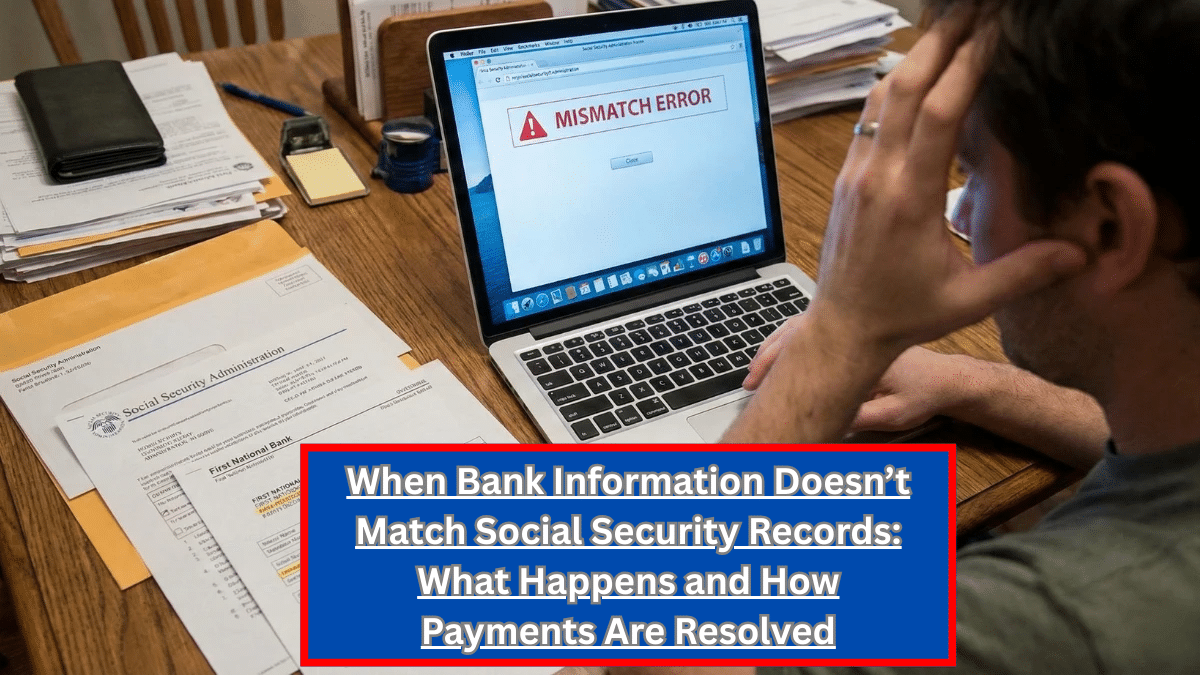
A bank detail mismatch occurs when the information connected to a bank account does not align with the details in SSA records. This can involve:
- Differences in the account holder’s name
- Ownership discrepancies on joint accounts
- Incorrect routing or account numbers
- Recently updated or changed bank information
Before accepting a federal benefit deposit, banks are required to verify that the account holder matches the payment record. If the information does not reasonably align, the deposit may be rejected.
What Happens When a Mismatch Is Detected
| Issue | Result |
|---|---|
| Name mismatch | Deposit rejected |
| Closed or inactive account | Payment returned to SSA |
| Incorrect routing number | Funds cannot be posted |
| Ownership verification failure | Deposit blocked |
| Recent bank update | Temporary delay |
When a mismatch is identified, the bank typically sends the payment back electronically. The beneficiary may not receive immediate notice, which is why the missing deposit can come as a surprise.
Why Banks Reject the Payment
Banks must follow federal anti-fraud and identity verification requirements. These rules apply to all government payments, including Social Security benefits.
If the name or ownership details on the account do not reasonably match SSA records, the bank is obligated to reject the deposit. Even if the account appears active and valid, the payment cannot be accepted if verification standards are not met.
This process is designed to protect beneficiaries from fraud, identity theft, and misdirected payments.
Does This Mean Benefits Are Stopped?
No. A mismatch does not cancel or reduce benefits.
The SSA pauses payment processing only until accurate banking information is confirmed. Once the corrected details are verified, the funds are reissued. Eligibility for benefits remains unchanged throughout the process.
How the SSA Handles Returned Payments
When a payment is returned:
- The SSA records the rejection.
- The account may be flagged for review.
- The agency waits for updated banking information.
After corrected details are submitted and verified, the SSA reissues the payment either by direct deposit or, in some cases, by paper check. The funds are not forfeited; they are simply delayed until proper verification is completed.
Common Causes of Mismatches
Several routine situations can lead to mismatched records, including:
- Name changes due to marriage or divorce
- Switching to a new bank
- Using a joint account where the primary name differs
- Typographical errors when updating account details
- Deposits directed to closed or inactive accounts
Even small spelling differences can trigger automated verification systems.
How Long Corrections Usually Take
After submitting updated banking information, it generally takes one to two payment cycles for the corrected payment to be reissued. The exact timing depends on:
- Verification processing
- Banking procedures
- The regular payment schedule
Delays are typically temporary and resolved once accurate information is confirmed.
What Has Not Changed
There are no new SSA policies introducing stricter matching rules. These verification procedures have been in place for many years to safeguard federal benefit payments.
If a payment is delayed due to a mismatch, it reflects standard processing safeguards, not a new rule or enforcement action.
What Beneficiaries Should Do
To prevent payment disruptions:
- Ensure your SSA record name exactly matches your bank account name.
- Double-check routing and account numbers when updating details.
- Make changes well before your scheduled payment date.
- Monitor official SSA communications if a payment is returned.
Taking these steps can reduce the risk of delays and help restore payments more quickly if a mismatch occurs.
Key Facts
- Name mismatches are a common cause of returned payments.
- Benefits are not lost because of banking errors.
- Banks are required to reject deposits that fail verification checks.
- The SSA reissues payments after corrected information is confirmed.
- No new rule has created stricter requirements.
Conclusion
When bank details do not match Social Security records, payments may be delayed or returned. However, benefits remain protected. The issue is administrative, not a loss of eligibility. By promptly correcting account information and ensuring records match exactly, beneficiaries can restore their payments and resume their normal deposit schedule.
Disclaimer
This article is for informational purposes only and does not constitute financial or legal advice. Social Security payment processing follows official SSA and banking regulations.

Written by our editorial team, committed to accurate and responsible reporting.